
A broken or faulty window lock on a uPVC window does not always mean that you need a new window or an entirely new lock. Most window lock repairs take between 30 and 60 minutes and the fix often involves replacing a single component rather than the entire mechanism. In this guide, we will guide you through diagnosis, safe opening, repair, and prevention for the most common uPVC window lock failures.
Broken window lock: what to do first
For most homeowners, a broken window lock looks like one of three things: the window handle turns but the sash will not open, the key will not move at all, or the handle is stuck in the closed position. All three of these problems are fixable.
Start with safety and security checks:
- A broken window lock can affect your home’s security. Intruders can force open a window with a broken lock in seconds, so double-check that ground-floor or accessible windows with faulty locks are not left unsecured overnight.
- A functioning window lock deters potential intruders. If the window is stuck open and will not lock, use timber wedges or a sash stop as a temporary secure measure until it can be repaired.
- If the issue is a jammed window lock on a closed window, focus on safe opening first. Do not force a stiff handle; excessive force can damage window locks, particularly the spindle or uPVC window gearbox inside.
Stop DIY immediately and call a professional if the window frame is visibly damaged, the glass is smashed, or if the window is a sole fire escape from an upstairs bedroom. uPVC window locks, espag strips, and multi-point locking mechanism systems can almost always be repaired or replaced independently of the full uPVC window.
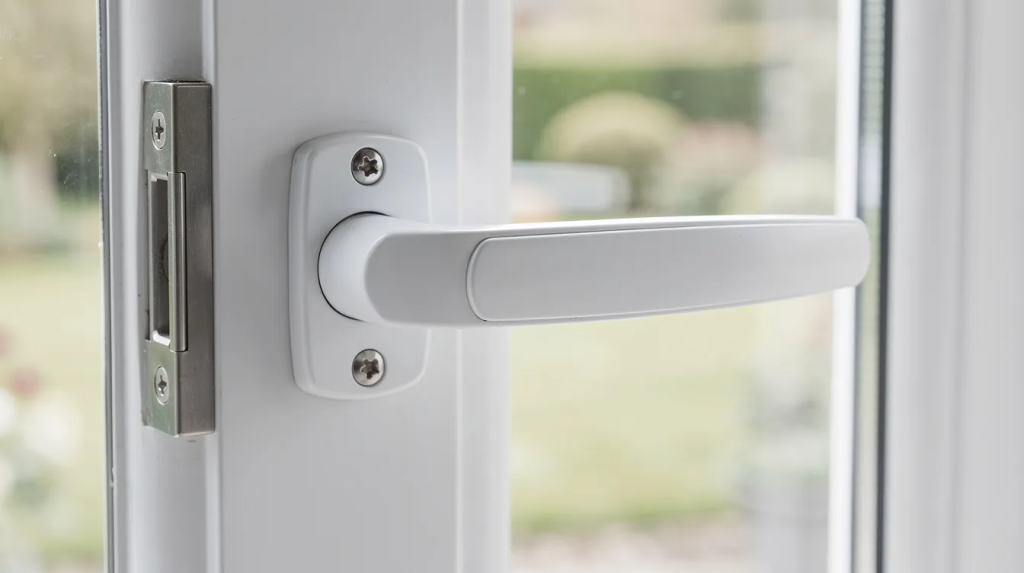
Common signs and causes of a broken uPVC window lock
Most window lock problems start gradually. Signs of a failing window lock include stiff handles and misalignment that worsen over weeks before a complete failure. Common symptoms of a failing window lock include a loose handle or failure to engage when turning the key.
The basic anatomy of a typical espagnolette uPVC lock: the window handle turns a spindle, which rotates a gearbox (centre case) inside the sash edge. The gearbox drives a locking strip with mushroom cams or rollers that engage with keeps (strike plates) fixed to the window frame. Each locking point must meet its keep for the lock to secure the sash.
Common mechanical failures include:
- Worn gearbox teeth in older installations from 2005 to 2012, where zinc alloy components have reached their 15 to 25 year wear life.
- A broken key snapping inside the cylinder, blocking the barrel.
- Loose lock parts such as fixing screws backing out over time, allowing the handle to wobble and transfer damaging force to the gearbox.
Misalignment can prevent window locks from engaging properly. Sagging sashes cause misaligned locks where rollers no longer reach the keeps, mimicking a broken uPVC window lock even when internal parts are intact. Rust and corrosion can weaken window lock components, particularly in coastal locations or kitchens with high moisture exposure. Dirt and debris accumulation can jam window locking mechanisms on high-traffic windows that lack regular cleaning and lubrication. Common causes of broken window locks include wear and tear, corroded parts, repeated slamming, and thermal expansion of the plastic frame.
How to open a stuck or jammed uPVC window lock safely
Improper attempts to open a jammed lock can crack the sash, damage the frame, or shatter the glass. Patience and the right tools matter more than strength.
The approach differs depending on whether you have a loose, non-functioning handle (failed spindle) or a seized mechanism where nothing moves at all.
Step-by-step for a typical side-hung uPVC window:
- Remove the handle by lifting the decorative caps and unscrewing the two fixing screws. Expose the spindle hole.
- Test if the spindle turns the gearbox by inserting an allen key or flathead screwdriver into the square hole and rotating gently. If the gearbox responds, the problem is the handle or spindle, not the entire mechanism.
- If the gearbox does not respond, use a bent allen key and needle nose pliers from inside to push back individual cams or shoot bolts along the locking strip. Protect the frame with a plastic or cardboard shim to avoid scratching.
Modern uPVC hardware often uses co-extruded seals that cannot be pulled out, so access the locking points by gently flexing the sash and using thin tools. Older windows with removable gaskets allow better visibility. To fix a failing lock, remove debris and clean locking points before assuming the mechanism is dead. Adjusting the alignment of the window can resolve locking issues where the sash has shifted slightly.
If the jammed lock will not release after these steps, a completely failed gearbox is the likely cause. At this stage, calling a specialist is the better option; forcing the mechanism risks cracking the frame.
DIY checks and repairs for broken uPVC window locks
Many issues (loose parts, misaligned locks, dirt-related jamming) can be addressed with basic tools. Structural damage and advanced uPVC hardware repairs should be left to professionals.
Standard toolkit for uPVC window lock work:
| Tool | Purpose |
|---|---|
| Pozi screwdrivers | Handle and keep screws |
| 3-5 mm allen key set | Cam adjustment |
| Small adjustable spanner / suitable wrench | Keep repositioning |
| Non-metallic pry tool | Protecting frame during access |
| Silicone spray lubricant | Lubrication of moving parts |
| Soft cloth and clean cloth used with warm water | Regular cleaning and wiping |
Tightening loose parts: Check handle screws behind the decorative caps. Tightening loose screws can enhance the security of window locks. A quarter-turn on each screw often removes handle play that would otherwise transfer damaging force to the gearbox.
Alignment check: Close the window slowly and watch where the sash meets the frame. Adjust keeps up, down, in, or out using their fixing screws until cams engage fully. Re-test the locking action.
Cleaning a jammed lock caused by dirt: Brush grit from the espag strip slots and keep holes. Apply a light silicone spray to the moving parts, work the handle to distribute it, then wipe off overspray with a clean cloth. Do not over-apply.
Broken key in the lock barrel: Grip any protruding fragment with needle nose pliers and pull straight out. Do not push the key further in. Graphite powder can help free a stuck fragment. If the broken piece is flush or deeper, a locksmith with extraction tools is needed.
A lock housing should be replaced if cracked or severely corroded. Any sign of cracked plastic around the handle base, deformation of the sash, or metal fragments from the locking mechanism indicates internal failure requiring replacement parts rather than further DIY attempts. Professional locksmiths can assess if a lock needs repair or full replacement. Replacement parts for window locks are often inexpensive and widely available. Most window lock repairs take 30 to 60 minutes in a single visit.
Would you like to discuss a window repair? Get in touch with Cosyhomes Windows for a free quote and personalised advice from our experienced team.